Section 38 vs section 278 works explained
Section 38 vs section 278 comes down to one question: is the road new, or is it already public? A section 38 agreement adopts a new estate road. A section 278 agreement lets you alter the existing highway, most often for your site access. Here is how each works and what the groundworker builds.
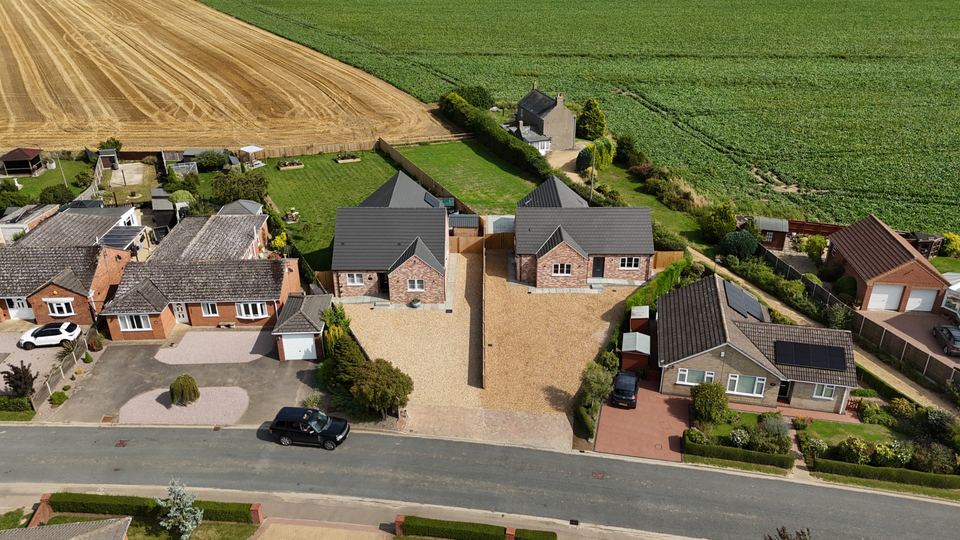
- 9homes at Ramsey with road drainage complete
- 6homes at Surfleet with a permeable road
- NRSWAstreet works qualified
Section 38 and section 278 side by side
| Section 38 | Section 278 | |
|---|---|---|
| The law | Highways Act 1980, section 38 | Highways Act 1980, section 278 |
| What it covers | New roads built by the developer, adopted as public highway | Alterations to the existing public highway |
| Typical works | Estate roads, footways, road drainage, street lighting | Bellmouths, junctions, footway links, crossings, visibility splays |
| Where the work happens | On the development land | On a live public road |
| Why you need it | So the council maintains the road, not a management company | Usually a planning condition or obligation for the access |
| Security | Bond or cash deposit until adoption | Bond or cash deposit until the works are signed off |
| Who signs | Developer and the highway authority | Developer and the highway authority |
The highway authority is the county or unitary council. Around our base that means Cambridgeshire, Lincolnshire and Norfolk County Councils, each with its own design guide and specification.
Section 38: new estate roads adopted by the council
A section 38 agreement is a deal with the highway authority: you build the new road to its standard, it inspects the work, and after a maintenance period it adopts the road as a public highway maintainable at public expense.
The usual sequence runs like this. The road is designed to the council's estate road standards and submitted for technical approval. The agreement is signed and a bond or cash deposit lodged, along with the council's inspection fees. The developer builds the road with inspections at each layer. Once the road is substantially complete a first certificate starts the maintenance period, during which the developer puts right any defects. After a final inspection the road is adopted and the bond released.
Building plots on a private street triggers the Advance Payments Code, which asks the developer to secure the cost of the street works before building starts. A section 38 agreement with its bond is the usual way to meet that. The alternative is a private road kept by a management company, which buyers and lenders look at closely.
Section 278: works on the existing public highway
Section 278 works are the ones outside your red line: the new bellmouth where the estate road meets the existing road, a widened junction, a footway link to the village, a dropped crossing, a pedestrian refuge or a visibility splay cut back. The planning permission requires them before occupation.
The council approves the design, normally after a road safety audit, and the developer pays for the works and lodges security. Because the work sits on a live road, it is street works: permits, traffic management, signing and guarding, and qualified operatives under the New Roads and Street Works Act 1991 (NRSWA).
That is where a contractor's tickets matter. HB Developments holds street works (NRSWA) qualifications, so we open, build and reinstate the highway ourselves rather than handing the junction to another firm.
Where section 38, section 278 and section 104 meet
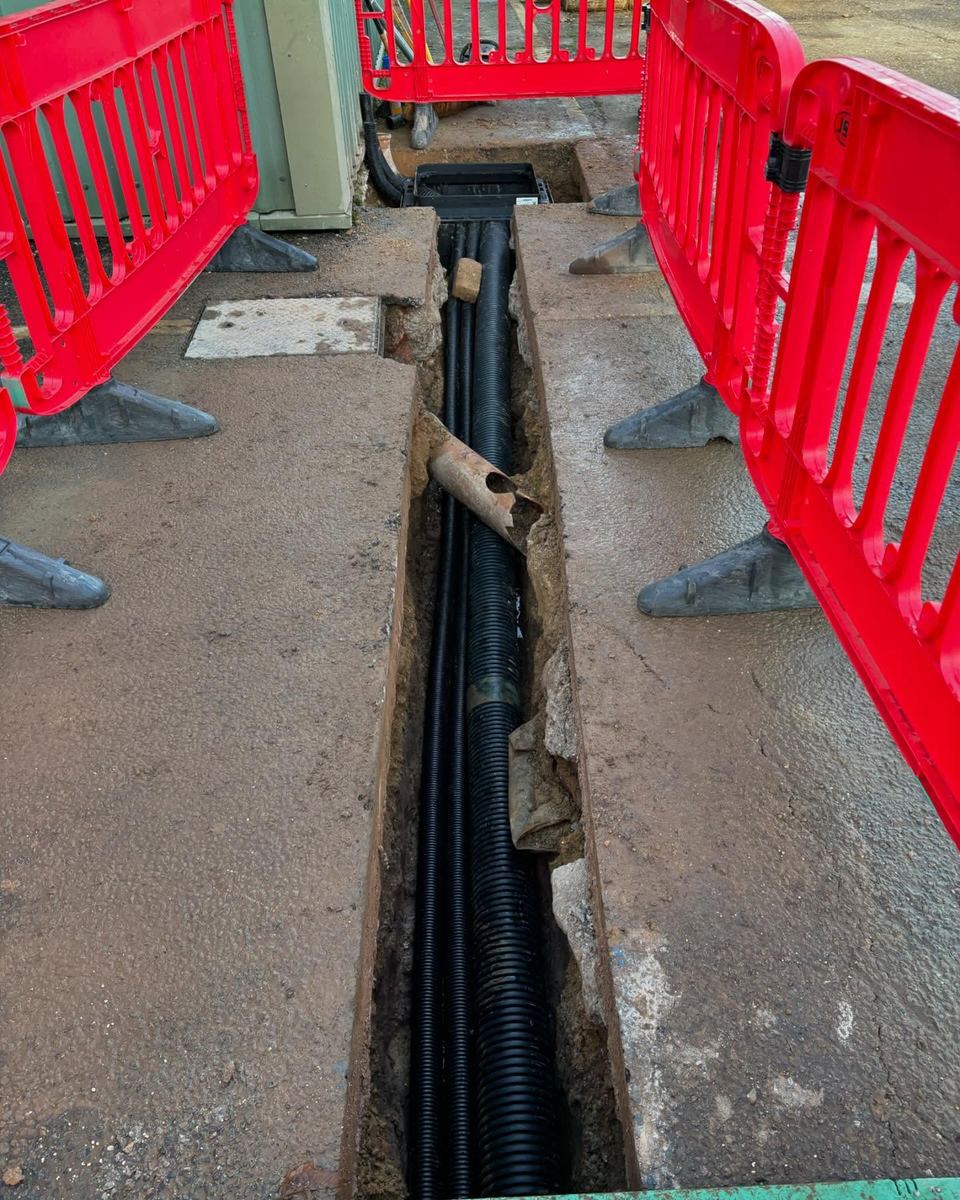
On a typical small residential scheme all three agreements touch the same few metres of ground. The section 278 works form the access off the existing road. The section 38 estate road runs from that junction into the site. Under the road, the foul and surface water sewers are built for adoption under a section 104 agreement with the water company, while the gullies and carrier drains serving only the road go with the road.
Sequence is everything. Sewers and ducts go in before the road build-up. The road is taken to base course early so plots can be reached and serviced, and the surface course goes down at the end, once the heavy plant and scaffold have gone, so it is not damaged during the build.
That is how our Ramsey site ran: all road drainage and plot groundworks completed for the nine homes, the site handed to the bricklayers, then our return as main contractor to complete the road surfacing, paths and patios. At Surfleet we laid the permeable road serving Plots 1 and 2 for Ark Property Centre.
What the groundworks contractor builds on S38 and S278 works
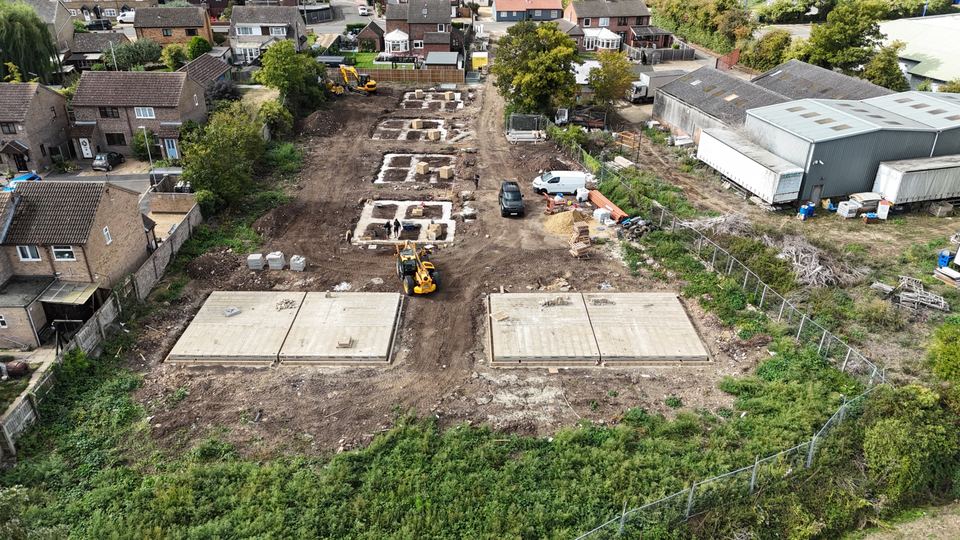
- Setting out to the approved highways drawings, with levels checked against the drainage
- Excavation to formation, with soft spots dug out and replaced
- Road drainage: gullies, carrier drains and connections
- Service ducts and crossings laid before the road build-up
- Sub-base laid and compacted in layers, ready for each inspection
- Kerbs, edgings and footways
- Base course early, surface course at the end, or permeable block paving where the design calls for it
- Junction works on the live road with traffic management and reinstatement
Pricing the roads with the sewers and the plots keeps one programme. See our S38 and S278 road works service.
Where S38 and S278 schemes lose time
Most hold-ups on small schemes come from paperwork and sequencing, not from the build itself:
- Late technical approval. The council cannot inspect a road it has not approved, so layers built early are at the developer's risk.
- Missed inspections. Each layer is inspected before the next goes on. Book them and have the layer ready, or the gang stands.
- Drainage clashes. Road gullies, sewers and service ducts fighting for the same space. Check the drainage and highways drawings against each other before the first dig.
- Surface course too early. Laid before the plots are finished, it gets damaged by plant and has to be patched before adoption.
- Street works permits. Work on the live road needs a permit and traffic management booked ahead, so the S278 junction belongs in the programme from day one.
Send these with your road works tender
Highways layout
The approved or submitted S38 and S278 drawings, with levels and construction details.
Council specification
The highway authority's build-ups and materials set the quantities we price.
Drainage layout
Road drainage and sewers are programmed together, so we need both.
Planning conditions
The condition wording tells us when the access and the S278 works must be finished.
Phasing
Which plots come first decides when base course and surface course go down.
Jobs that prove it
Real jobs, named places, our own photos.
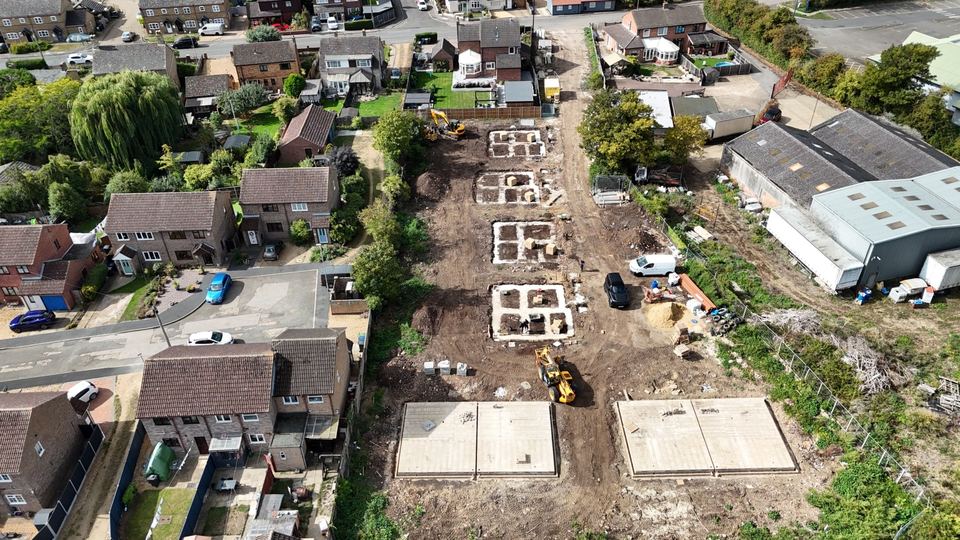
Nine homes for Rose Homes
Main contractor: ring beams, block and beam, plot drainage and a 3.5 m deep road sewer connection.
See the job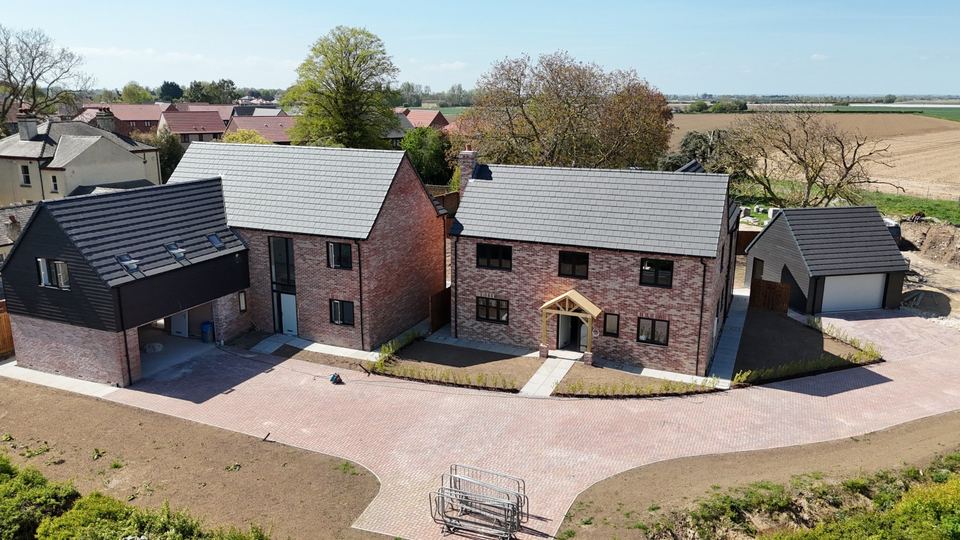
Six new builds for Ark Property and MDG
Foundations up to 2.9 m wide, 600 m³ of concrete poured and 4,000 tonnes mucked away.
See the job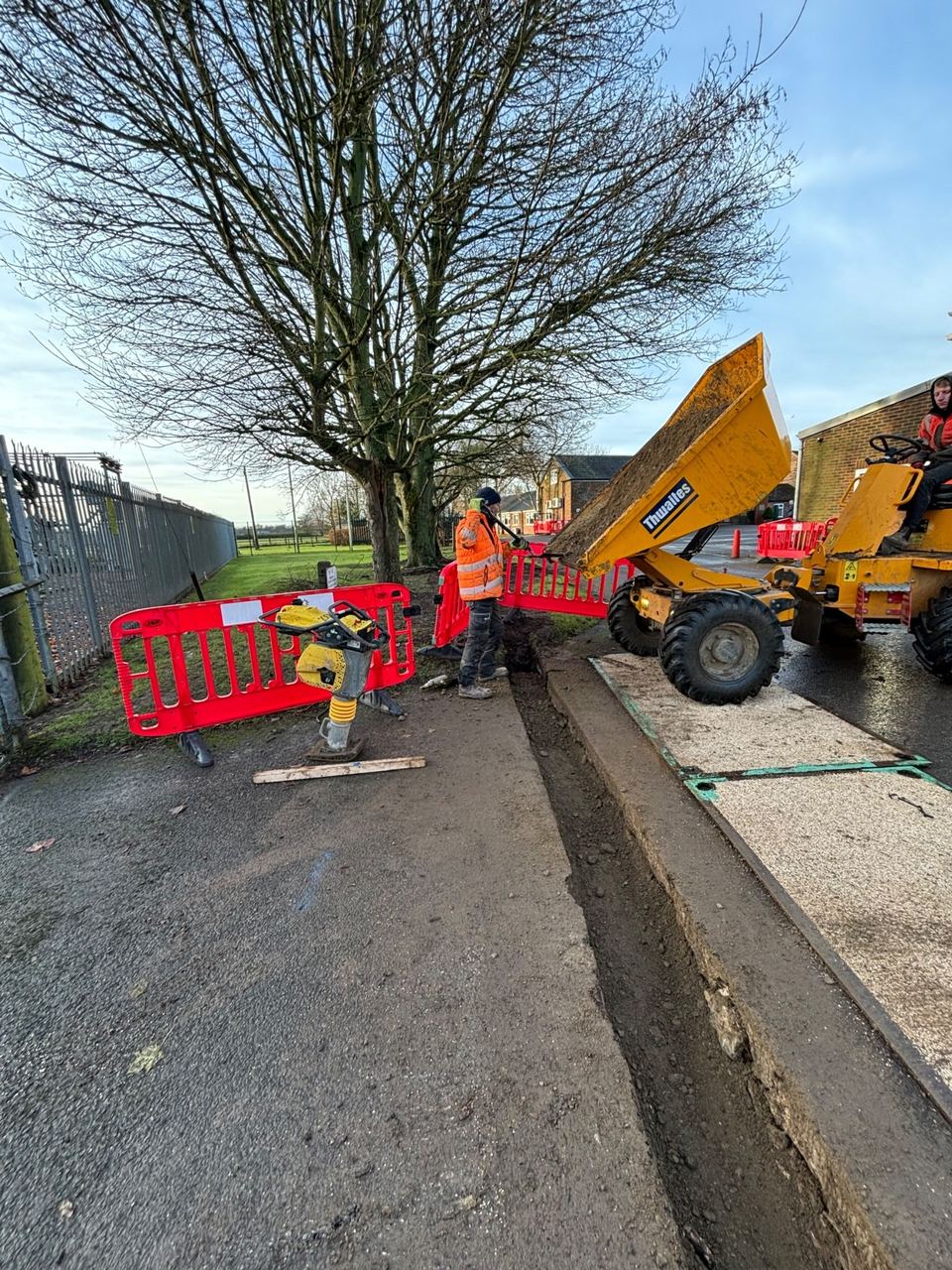
180 m duct run for Taylors Bulbs
180 m of 125 mm electrical duct through a live site, crossing the main entrance with lorries still running.
See the jobWhat customers say about Haydn and the team
“Just OUTSTANDING from start to finish, nothing was too much trouble and communication was fantastic throughout the process would absolutely recommend him.”
“Competitive rates,would highly recommend. I’ve had many jobs done, all been completed to 100% satisfaction.”
“Excellent service fast and efficient 💪”
Quick answers
Anything else, ring Haydn on 01945 669203.
What is the difference between section 38 and section 278?
Section 38 covers new roads a developer builds for the council to adopt. Section 278 covers works the developer carries out on the existing public highway, such as a new junction or footway link.
Do I need both on one site?
Often, yes. A new estate road for adoption needs a section 38 agreement, and the junction where it meets the existing road needs section 278 works.
Who builds section 278 works?
The developer's contractor, approved by the highway authority. The work is on a live road, so the operatives need street works (NRSWA) qualifications, which we hold.
Why is the surface course laid last?
So it is not damaged by plant, deliveries and scaffold during the build. The road runs on base course until the plots are finished.
Is road drainage part of section 104?
Drains serving only the road go with the road under section 38. Sewers serving the homes are adopted by the water company under section 104.
Can you price the roads, sewers and plots together?
Yes. Send your drawings and Haydn prices each package line by line, so you can award one or all.
Send the drawings, get a priced package
Plot numbers, packages and a start date are enough to begin. Haydn prices it and comes back to you.