Section 104 agreement explained for developers
A section 104 agreement is how new sewers on your development become public sewers, owned and maintained by the water company. This guide walks small developers through the process, the bond, the inspections and the maintenance period, and shows where the groundworks contractor makes adoption smooth or painful.
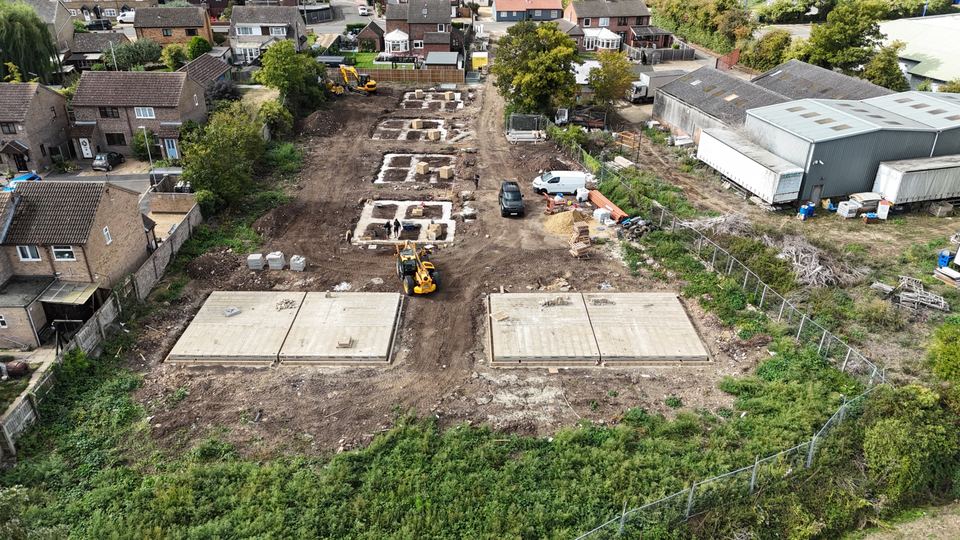
- 9homes at Ramsey: road drainage and plot groundworks
- 7Ramsey plots dug out in the first week
- £10minsurance through First Point
What a section 104 agreement is
Section 104 of the Water Industry Act 1991 lets a developer agree with the sewerage undertaker that the sewers built on a new development will be adopted once they are finished to the required standard. Across most of East Anglia the sewerage undertaker is Anglian Water.
The agreement sets out what will be built, the standard it is built to, how the water company inspects it, the security the developer puts up, and the point at which the sewers transfer. Once adopted, they are public sewers: the water company owns them, maintains them and answers for them.
It covers the shared sewers that serve more than one property, plus any pumping station and rising main that goes with them. Private drains inside each plot stay with the homeowner.
Why sewer adoption matters to a developer
Unadopted sewers are a liability that never goes away. Somebody has to maintain them, and buyers' solicitors and lenders ask who. Without adoption that answer is a management company and a service charge, which puts buyers off and slows sales.
Adoption also protects you. Once the sewers are adopted the water company takes responsibility for them, and your bond is released. In England, new sewers intended for adoption are designed to the water industry's Design and Construction Guidance, which replaced the old Sewers for Adoption manual, so the design standard is the same whichever water company you deal with.
The practical point for a small developer: start the S104 conversation early. The agreement, the technical approval and the bond all have to be in place before the water company inspects the work, and work built before approval is at the developer's risk.
The section 104 process step by step
- Capacity and connection. Check the public sewer has capacity and agree the point of connection with the water company.
- Design. Your drainage engineer designs the foul and surface water sewers to the adoption standard, with levels, falls, manholes and any attenuation.
- Application. The drawings, calculations and the water company's fees go in with the S104 application.
- Technical approval. The water company checks the design and approves it, or returns comments to resolve.
- Agreement and bond. The legal agreement is signed and the developer lodges a bond or cash security, so the water company can finish the work if the developer cannot.
- Construction and inspection. The groundworker builds the sewers. The water company's inspector visits at key stages: pipe bedding, manholes, connections and backfill.
- Testing and CCTV. Pipes are pressure or air tested and a CCTV survey records every run. Defects are dug out and put right.
- Maintenance period. Once the sewers are complete and in use, a maintenance period set in the agreement begins. The developer remains responsible for defects.
- Adoption. After a final inspection and any remedial work, the sewers vest in the water company and the bond is released.
Who does what on a section 104 scheme
| Party | Responsibility |
|---|---|
| Developer | Signs the agreement, pays the fees, lodges the bond, and carries responsibility until adoption |
| Drainage engineer | Designs the sewers to the adoption standard and handles technical comments |
| Water company | Approves the design, inspects the work, reviews the tests and CCTV, then adopts |
| Groundworks contractor | Builds the sewers to the approved drawings, books inspections, tests, surveys and supplies as-built records |
The contractor is the party the inspector deals with on site every week, so pick one that has laid adoptable drainage before and keeps the paperwork straight.
Section 104, section 106 and the highway drains
Three different things get confused on small schemes:
- Section 104 is the adoption of new sewers you build.
- Section 106 of the Water Industry Act is the right to connect a drain or private sewer to the existing public sewer, with notice to the water company. It is not the same as a section 106 planning obligation.
- Road drainage, the gullies and the carrier drains that serve only the highway, belong to the road. On an estate road adopted under section 38 they go to the highway authority, not the water company.
A good drainage layout shows which pipe goes to which owner. We build to that split so nothing falls between two adoption agreements.
Where the groundworker makes or breaks adoption
Adoption fails on small things done badly: a pipe laid without its proper bedding and surround, a back fall in one run, a manhole benched wrongly, concrete slurry or spoil left in a line, a missing as-built level. Each one shows up at test or on the CCTV survey and costs time to put right.
Our approach is simple: lay to the approved levels and falls, bed and surround every pipe to specification, test each run before backfill, keep the lines clean while the plots are built, and hand over records the inspector can sign off. On the nine-home Ramsey development we completed all the road drainage and plot groundworks before handing the site to the bricklayers, and we are returning as main contractor to complete the road surfacing, paths and patios.
Sewers sit inside a wider package of roads, ducts and connections. See our sewer connections and utilities and drainage services, or send your S104 drawings for a price.
What to have ready before you tender the drainage
Approved or submitted S104 drawings
Levels, pipe sizes, manholes and connection points let us price exactly what will be inspected.
Drainage calculations
Attenuation, flow controls and any pumping station details change materials and dig depths.
Site investigation
Ground and groundwater levels decide trench support and dewatering on Fen sites.
Highways drawings
Road drainage and services crossing the estate road need to be programmed with the sewers.
Plot phasing
Tell us which plots come first so the sewers and connections are in before the plots need them.
Jobs that prove it
Real jobs, named places, our own photos.
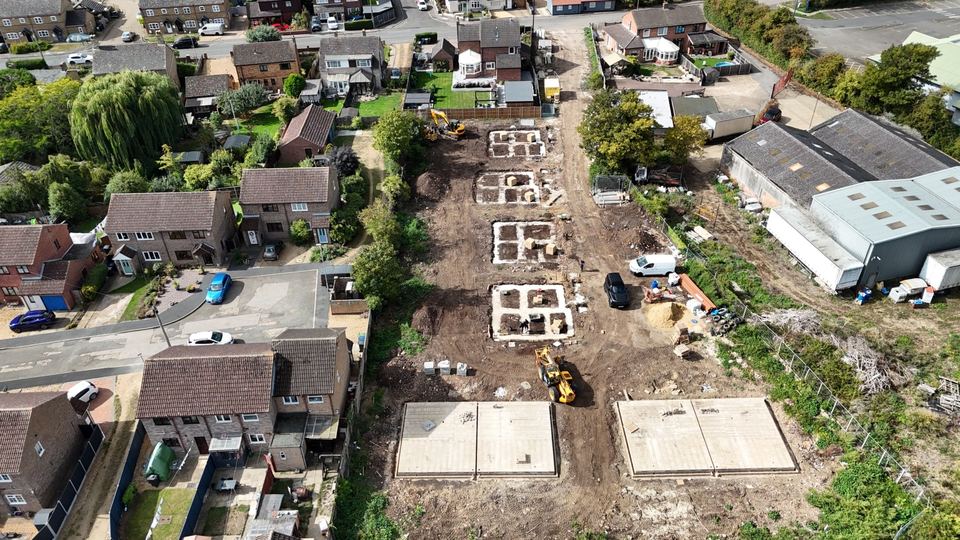
Nine homes for Rose Homes
Main contractor: ring beams, block and beam, plot drainage and a 3.5 m deep road sewer connection.
See the job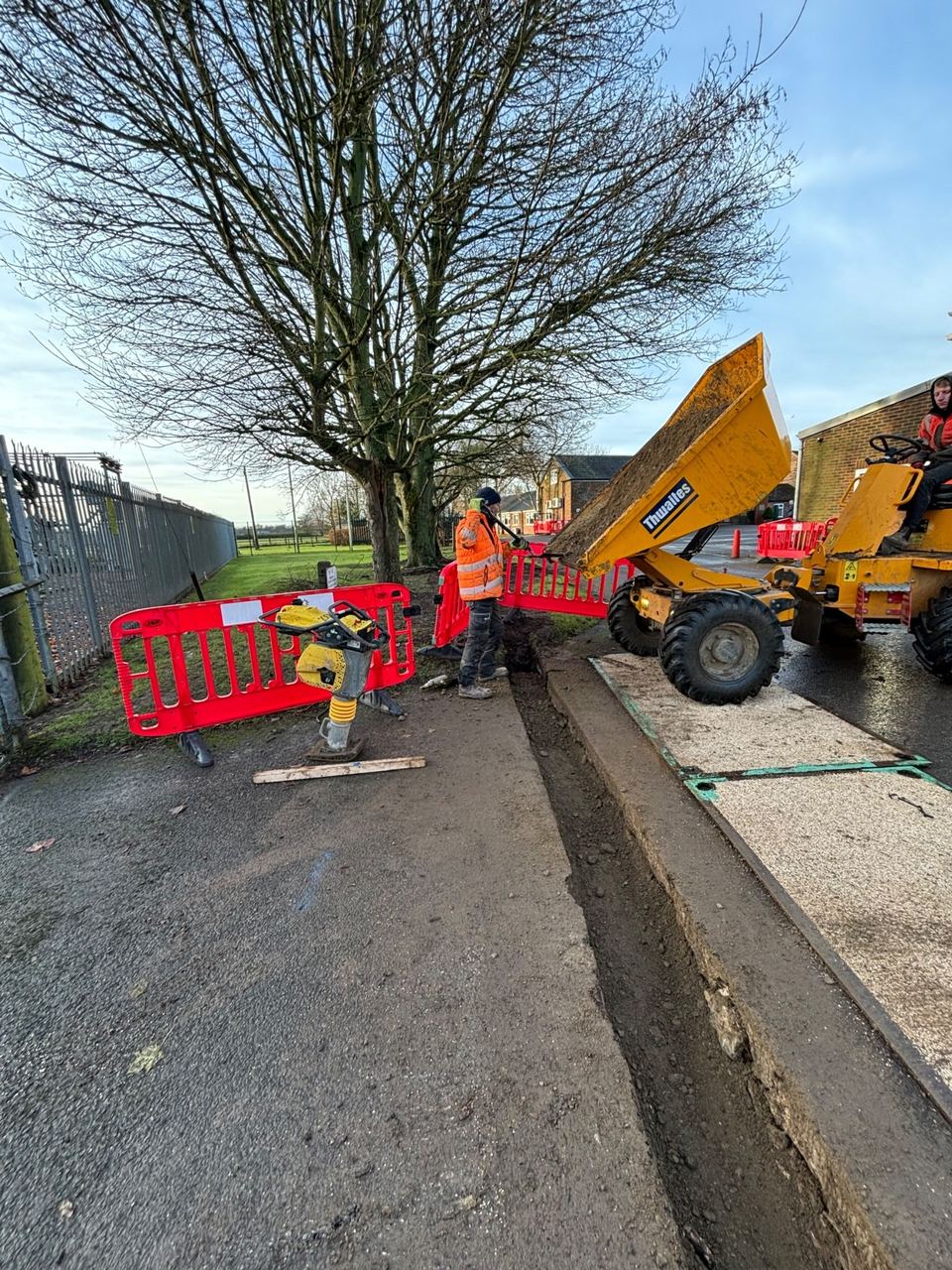
180 m duct run for Taylors Bulbs
180 m of 125 mm electrical duct through a live site, crossing the main entrance with lorries still running.
See the job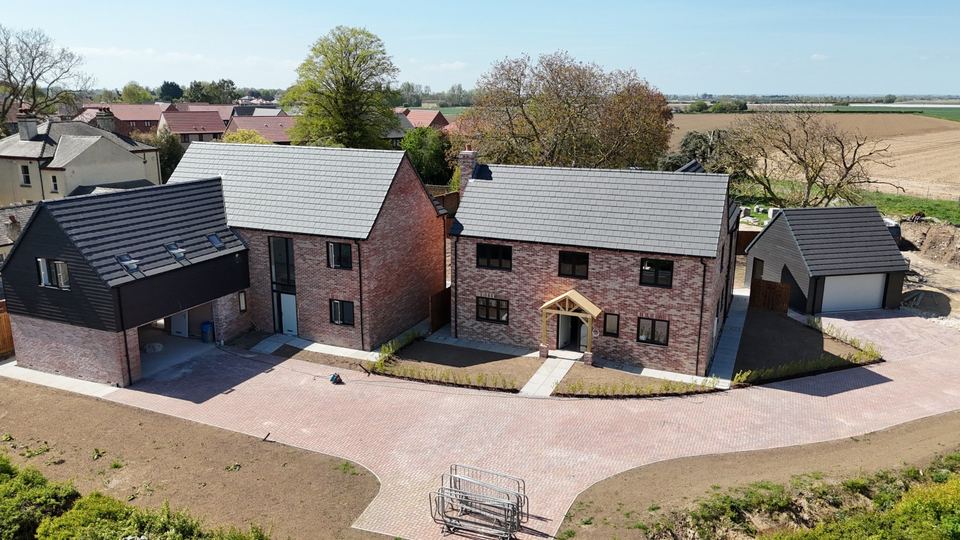
Six new builds for Ark Property and MDG
Foundations up to 2.9 m wide, 600 m³ of concrete poured and 4,000 tonnes mucked away.
See the jobWhat customers say about Haydn and the team
“Just OUTSTANDING from start to finish, nothing was too much trouble and communication was fantastic throughout the process would absolutely recommend him.”
“Competitive rates,would highly recommend. I’ve had many jobs done, all been completed to 100% satisfaction.”
“Excellent service fast and efficient 💪”
Quick answers
Anything else, ring Haydn on 01945 669203.
What is a section 104 agreement?
An agreement under section 104 of the Water Industry Act 1991 between a developer and the water company, so new sewers built on a development are adopted as public sewers once they are complete and the maintenance period ends.
Who signs the section 104 agreement?
The developer and the sewerage undertaker. The groundworks contractor builds the sewers to the approved design and deals with the water company's inspector on site.
Why is there a bond?
The bond or cash security protects the water company if the developer cannot finish the sewers. It is released once the sewers are adopted.
Can I start building the sewers before the agreement is signed?
Work built before technical approval and the agreement is at your risk, because the water company has not inspected it. Get approval first, then build.
Do you build adoptable sewers?
Yes. Roads and sewers are part of our developer packages, and our operatives hold street works (NRSWA) qualifications for connections in the highway. Send your drawings for a price.
Where does road drainage fit?
Gullies and drains that serve only the road are adopted with the road under section 38, not under section 104. The drainage layout should show the split.
Send the drawings, get a priced package
Plot numbers, packages and a start date are enough to begin. Haydn prices it and comes back to you.