How much do groundworks cost per plot?
How much do groundworks cost per plot? The honest answer is a line-by-line price built from your drawings, because ground, foundation design, drainage, roads and muck away move the figure more than anything else. This guide shows what drives the number, using our own sites as the worked examples.
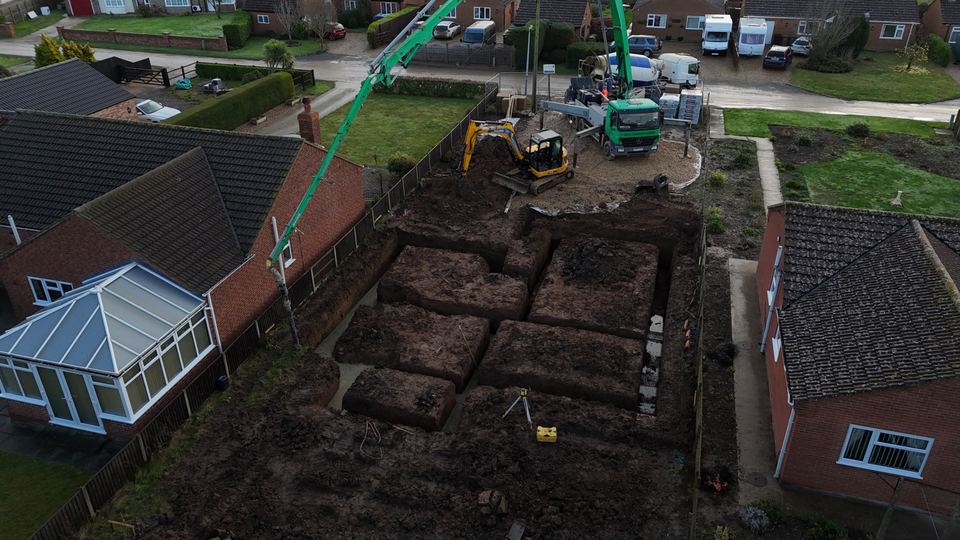
- 2 mdeep footings at Walpole St Peter
- 80 m³of concrete pumped and poured
- 600 tof soil off site in a week
Why a single per-plot figure misleads you
Search for a groundworks cost per plot and you will find round numbers with no ground, no drawings and no site behind them. Two identical house types on two plots a mile apart in the Fens can need completely different foundations, and that one decision changes the concrete, the steel, the dig and the muck away on every plot.
A groundworks price is the sum of a handful of big quantities: how deep you dig, how much comes out, what goes back in, how far the drainage runs and what the highway authority and water company want built. Get those quantities from the drawings and the site investigation and the price per plot falls out of the sums. Guess them and the budget is fiction.
That is why we price from drawings, not from a rate card. Everything below is what Haydn reads on your drawings before he puts a figure on a plot.
Eight things that set groundworks cost per plot
| Driver | What pushes the cost up | What to send us |
|---|---|---|
| Ground conditions | Peat, soft clay, silt, a high water table, trees near the footprint | Site investigation or trial pit logs |
| Foundation type | Deep strip or trench fill footings, heavy steel, raft designs | The engineer's foundation design |
| Piling on Fen ground | Rig mobilisation, pile numbers and depths, cropping, ring beams | Pile layout and ring beam details |
| Drainage and adoption | Long runs, deep inverts, manholes, attenuation, adoptable standards | Drainage layout and any S104 drawings |
| Roads | Adoptable build-ups, kerbs, road drainage, S278 junction works | Highways layout, S38 or S278 drawings |
| Muck away tonnages | Deep digs, poor material that cannot be reused, haul distance | Levels and any soil test results |
| Access | Narrow entrances, no room to stockpile, pump or crane needed | Site plan and photos of the entrance |
| Plot count and phasing | Small sites, stop-start programmes, plots released one at a time | Plot numbers and your build sequence |
Each row is a quantity or a constraint we price separately, so you see where the money goes and which design changes save it.
Ground conditions and foundation type
The ground sets the foundation, and the foundation sets most of the groundworks bill. On firm ground near the surface, strip footings are quick and economical. On the Fens, where peat and soft clay sit over firmer strata, the engineer either takes the footings down to good ground or puts the house on piles.
Both answers cost money in different places. Deep footings mean more dig, more concrete and more muck away. Piles mean a rig on site, cropping, steel and a ring beam, with far less spoil to take off. We have built both on our own sites: Plot 2 at Weston Hills stands on piles and a ring beam, and the Walpole St Peter bungalow went in on 2 m deep footings. Our guide to piled vs strip foundations sets out when each one wins.
Steel is the hidden line. Reinforcement cages in the trench, like the steel we fixed on the Spalding new builds for Ringwood and Simpson, add labour and material per plot, so an engineer's reinforcement schedule belongs in every tender pack.
Muck away tonnage: the line that catches budgets out
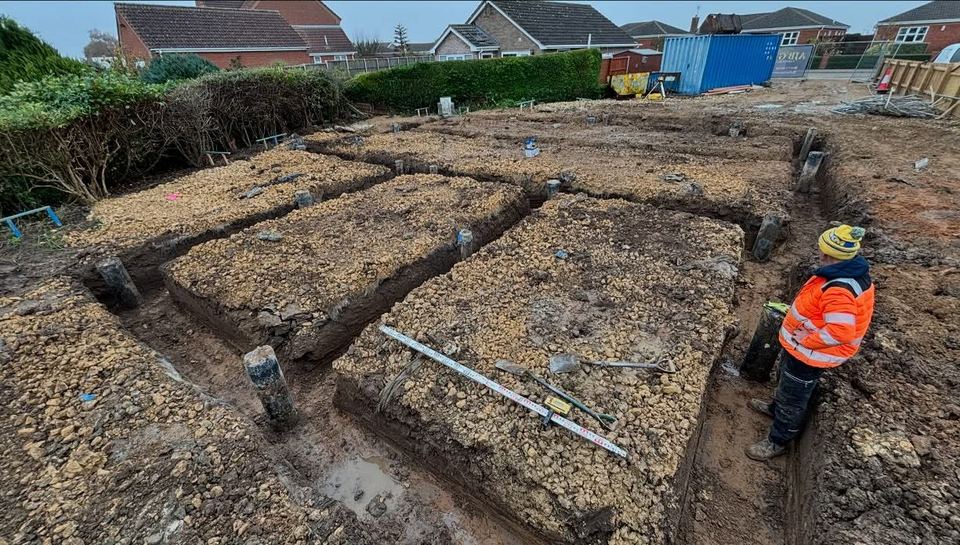
Every cubic metre you dig has to go somewhere. Excavated soil bulks up once it is out of the ground, so the lorry loads are always more than the hole looks. On deep footings the tonnage climbs fast.
At Walpole St Peter we took 600 tonnes of soil off site in a single week and pumped 80 m³ of concrete into 2 m deep footings, in relentless rain. That is one bungalow. Multiply that across a scheme and muck away becomes one of the biggest lines in the price.
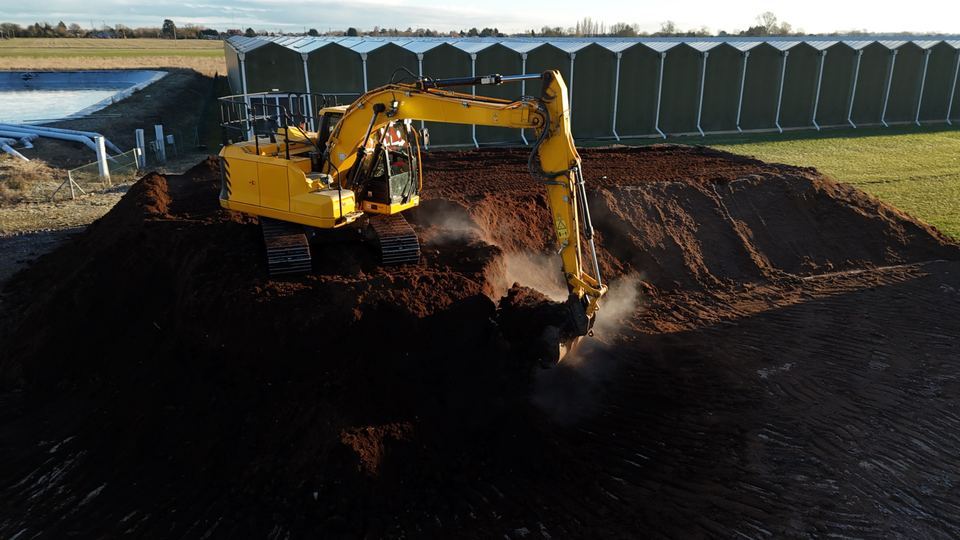
Three things bring it down: reusing suitable material on site for levels and landscaping, a foundation design that digs less, and a contractor who runs its own site clearance and muck away so the lorries are booked to the dig, not waiting on a third party. Soil that tests as anything other than clean, inert material costs more to dispose of, so a soil test before tender saves arguments later.
Drainage, roads and adoption
Plot drainage is only part of the story. If your sewers are to be adopted by the water company under a section 104 agreement, they are built to adoptable standards, inspected, tested and surveyed, and that changes the materials, the manholes and the time on site.
Roads follow the same logic. An estate road built for adoption under section 38, or a new junction onto the public road under section 278, has a set build-up, kerbs, road drainage and inspections. Our guide to section 38 vs section 278 explains the difference. On the nine-home Ramsey development we completed the road drainage and plot groundworks before handing over to the bricklayers, and we are returning as main contractor to complete the road surfacing, paths and patios.
Pricing roads and sewers with the plots in one package, through our roads and sewers team, keeps one programme and one point of contact.
Access, plot count and phasing
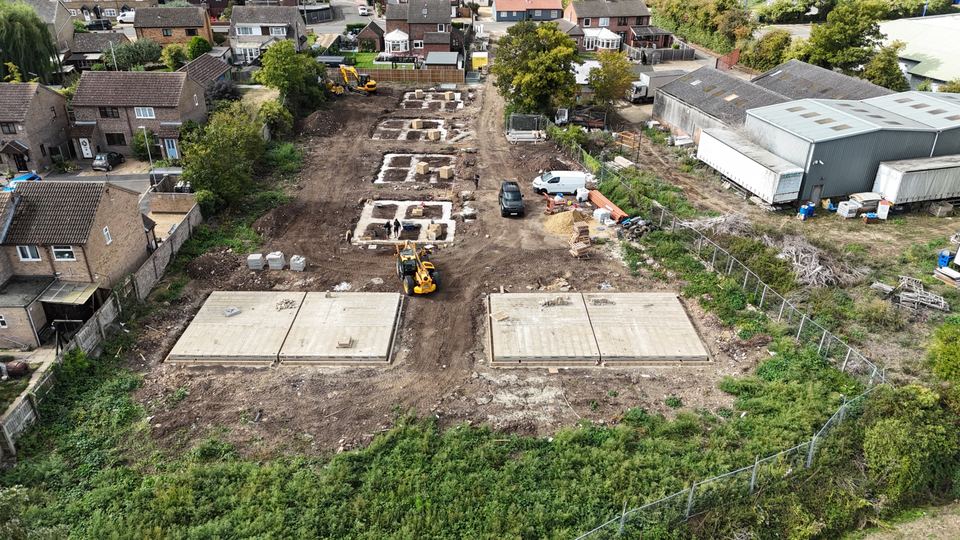
Mobilising plant, setting up welfare and bringing in the first loads of stone cost much the same for two plots as for ten, so the per-plot price drops as the scheme grows. A tight entrance, no room to stockpile spoil, or a concrete pump needed because a mixer cannot reach the trench all add cost.
Phasing matters as much as plot count. A continuous run of plots keeps the gang and the machines working. A stop-start programme, where plots are released one at a time to suit sales, means remobilising. Tell us how you want the plots delivered and we price the programme you will actually run. At Surfleet, for Ark Property Centre, we finished groundworks and brickwork on Plots 1 and 2, laid the permeable road serving them, completed the muck away and site clearance, and left the site ready for Plot 3.
Send drawings for a fixed price
The fastest route to a real groundworks cost per plot is a tender pack. Send what you have:
- Site layout and house type drawings
- Site investigation or trial pit logs
- The engineer's foundation design and reinforcement schedule
- Drainage layout, and S104 drawings if the sewers are for adoption
- Highways drawings for any S38 or S278 works
- Plot numbers, phasing and your target start date
Haydn prices it line by line, plot by plot, so you see every quantity. Send drawings for a fixed price or call Haydn on 01945 669203.
What a per-plot groundworks price covers
Site clearance and setting out
Strip, clear and set out each plot to the drawings before the first trench is dug.
Foundations
Strip or trench fill footings, or piles cropped and a ring beam cast, to the engineer's design.
Steel fixing
Reinforcement cages fixed in the trench and checked before the pour.
Floors
Block and beam or oversite concrete, ready for the next trade.
Below-ground drainage
Foul and surface water runs, manholes and connections, tested before backfill.
Service ducts
Ducts for power, water and data laid to each plot.
Muck away
Spoil loaded and taken off site, with suitable material kept back for levels.
External works
Kerbs, drives, paths and permeable paving to finish the plot.
Jobs that prove it
Real jobs, named places, our own photos.
High-spec bungalow, our own
2 m deep footings, 80 m³ of concrete and 600 tonnes off site in a week. On the market at £375,000.
See the job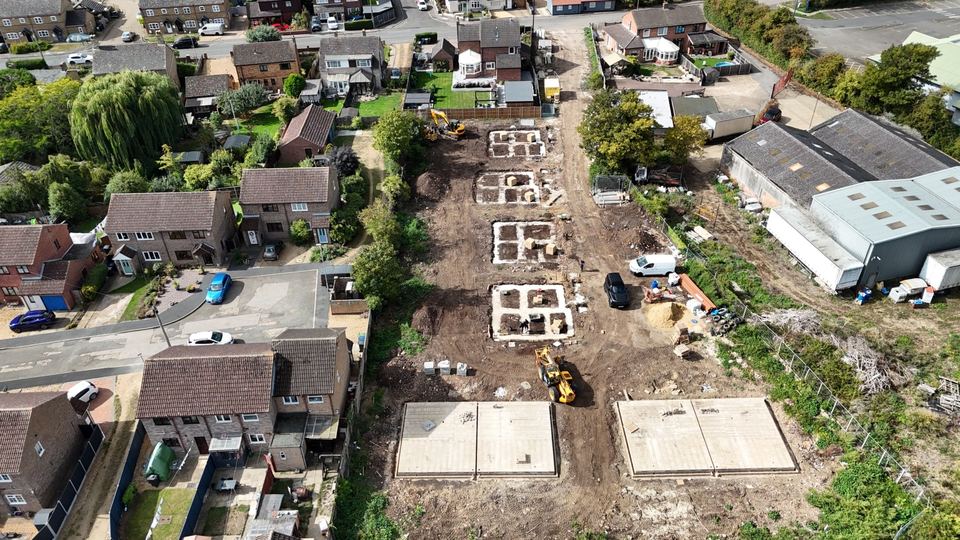
Nine homes for Rose Homes
Main contractor: ring beams, block and beam, plot drainage and a 3.5 m deep road sewer connection.
See the job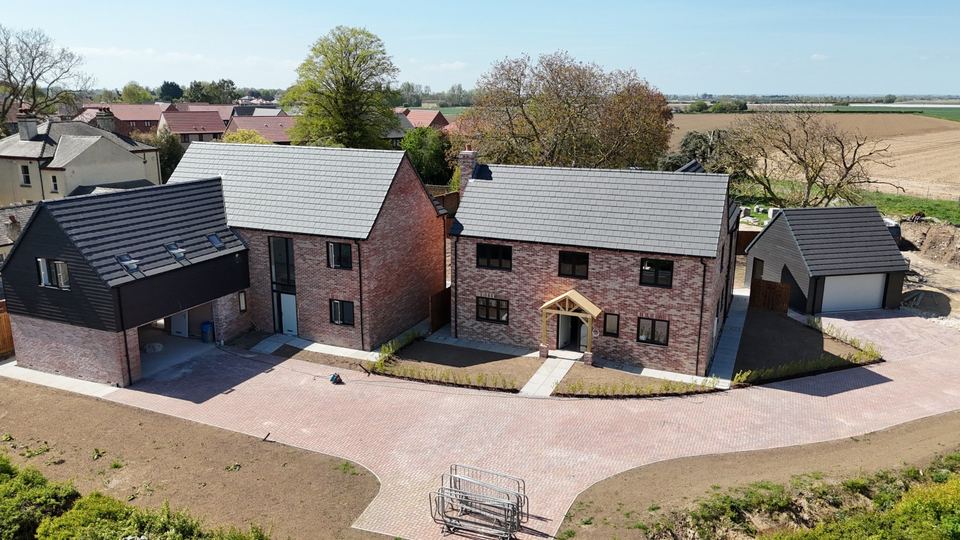
Six new builds for Ark Property and MDG
Foundations up to 2.9 m wide, 600 m³ of concrete poured and 4,000 tonnes mucked away.
See the jobWhat customers say about Haydn and the team
“Just OUTSTANDING from start to finish, nothing was too much trouble and communication was fantastic throughout the process would absolutely recommend him.”
“Competitive rates,would highly recommend. I’ve had many jobs done, all been completed to 100% satisfaction.”
“Excellent service fast and efficient 💪”
Quick answers
Anything else, ring Haydn on 01945 669203.
How much do groundworks cost per plot?
It depends on the ground, the foundation design, the drainage, the roads and the muck away on your site, which is why we price from drawings. Send your drawings and Haydn returns a line-by-line price per plot.
What is usually the biggest cost in groundworks?
Foundations and muck away. Deep footings on soft ground mean more dig, more concrete and more tonnage off site. At Walpole St Peter that was 600 tonnes of soil and 80 m³ of concrete for one bungalow.
Are piles cheaper than deep strip footings?
On deep soft ground they often are, because piles cut the dig, the concrete and the muck away. On firm ground close to the surface, strip footings win. Read piled vs strip foundations on Fen ground.
Does the price include roads and sewers?
If you want it to. We price plot groundworks, S104 drainage and S38 or S278 road works together or separately, so you can compare packages.
Can you do the brickwork too?
Yes. Surfleet and Papworth Everard were groundworks and brickwork packages, and we build complete homes on our own developments.
Where do you work?
We are based near Wisbech and take developer work nationwide. Most of our schemes sit across Cambridgeshire, Lincolnshire and Norfolk.
Send the drawings, get a priced package
Plot numbers, packages and a start date are enough to begin. Haydn prices it and comes back to you.