Horse arena drainage and sub-base, built by a groundworker
Horse arena drainage is the part of a ménage nobody sees and everybody notices when it fails. Standing water, a surface that turns to soup and a base that pumps mud upwards all start here. This is how we design and build menage drainage and the stone sub-base that sits on it.
- 180 mof ducting and 7 jointing pits at Holbeach
- 2 mdeep footings at Walpole St Peter
- 600 tof soil off site in a week
What sits under a riding arena
From the bottom up, a properly built arena has six layers:
- Formation. The firm subsoil, cut to one plane with a set fall and rolled.
- Geotextile membrane. Separates the subsoil from the stone so mud cannot pump up.
- Drains. Perforated pipes in stone-filled trenches, cut into the formation.
- Stone base. Clean, angular stone in rolled layers, blinded with finer stone.
- Separation membrane. Keeps the surface out of the stone.
- Surface. Sand, fibre, rubber or wax.
Leave one out and the arena fails early. The most common shortcut is the bottom membrane, and the result is a base that turns grey and soft within a couple of winters.
Herringbone or perimeter arena drainage?
Herringbone. Lateral drains run at an angle across the arena into a carrier pipe, like the bones of a fish. Water falling anywhere on the arena has a short path to a pipe. This is the standard on clay, silt and any ground that holds water, and it is what most Fen sites need.
Perimeter. A single drain round the edge, with the arena laid to fall towards it. It suits naturally free-draining ground, such as sandy soils over gravel, where water soaks down anyway and the drain only takes the surface run-off.
None. On a very free-draining site, the stone base and the natural ground take the water. It is rare and it needs a site visit and a test hole to prove it.
Where does the water go?
Arena drainage is only as good as its outfall. The carrier pipe has to discharge somewhere lower than the arena: a ditch, a dyke, a land drain or a soakaway. On a sloping site that is easy. On flat Fen ground it is the whole problem.
Soakaways struggle in clay and in winter when the water table rises to meet them. A ditch or dyke is the answer here, and many Fen dykes are run by Internal Drainage Boards, who expect to be asked before anyone connects a new outfall. We plan the route, the levels and the falls so the water leaves the site, and ditching and culverts are on our service list if the ditch needs work first.
Arena sub-base: stone, depth and compaction
The stone base spreads the load of a horse over the formation and lets water through to the drains. It must be clean, angular stone with no fines to clog it. Rounded gravel rolls under load; dirty scalpings block up.
Depth follows the ground. Firm ground needs less. Soft clay, silt or peat needs more, and very soft spots are dug out and replaced. Each layer is rolled before the next goes on, then the top is blinded and rolled to a true finish. A dip of a few centimetres in the base becomes a deep, wet spot in the surface.
This is our trade. We set levels and compact stone on every slab, yard and road we build, from the yard and bays with ACO drains for RJ Wright Ltd at Sutton St James to the grain store floors and aprons at Whittlesey.
Sub-base on peat and heavy clay
Soft formations need extra care. On peat, the soft organic layer is stripped back as far as practical and the formation proof-rolled to find the weak spots, which are dug out and replaced with stone. A heavier-grade geotextile goes down, then a deeper stone base in more layers.
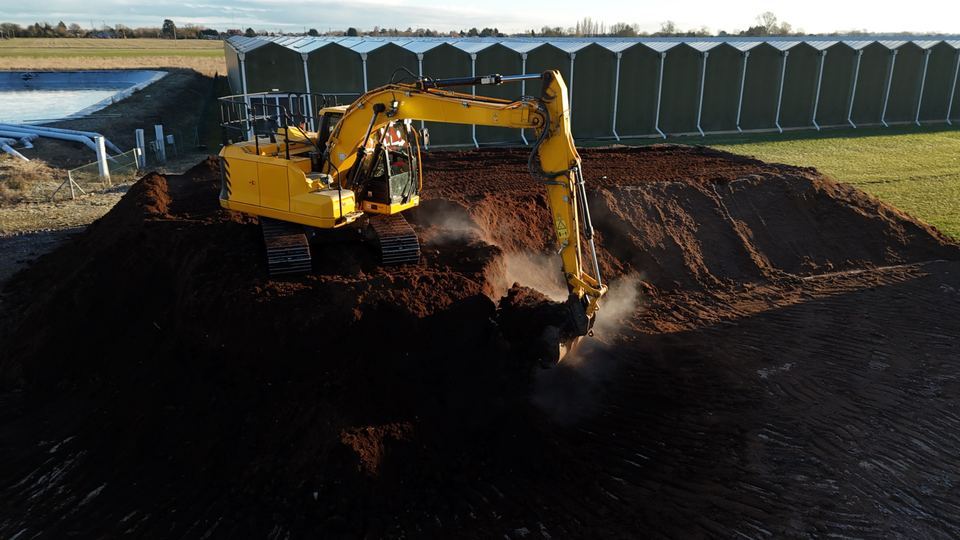
On heavy clay, the problem is water, not strength. Clay holds water and turns greasy when worked, so the dig is timed for dry weather, the formation is trimmed and rolled the same day, and the herringbone laterals go in close together. Around Spalding our excavators turn and shift peat as routine work, and at Weston Hills we put Plot 2 on piles and a ring beam because the ground called for it. We read the ground before we price it.
Why ménages flood: the five failures we see
- No outfall. Drains installed, but the carrier runs to a soakaway in clay or nowhere at all.
- No fall. The arena was laid dead level, so water sits.
- No bottom membrane. Subsoil has pumped up into the stone and sealed it.
- Dirty stone. Fines in the base have washed down and blocked the drains.
- Silted drains. Years of fine surface material have filled the pipes.
Most of these are fixable without starting again. See arena resurfacing and renovation. Building new? We design the drainage, build the base, lay the surface and fit the fencing as one job, so nobody can blame the trade before them. See horse ménage construction, or book a free site visit and Haydn will walk the ground, find the outfall and price it.
How we build arena drainage
Levels first
A site survey before a spade goes in, so the falls are designed, not guessed.
Outfall agreed
The route to the ditch, dyke or soakaway planned before the dig.
Pipes laid to fall
Every lateral and carrier checked for fall as it goes in.
Clean stone
Angular, washed stone with no fines in the trenches and the base.
Two membranes
One under the stone, one over it.
Rolled in layers
Each stone layer compacted before the next.
Jobs that prove it
Real jobs, named places, our own photos.
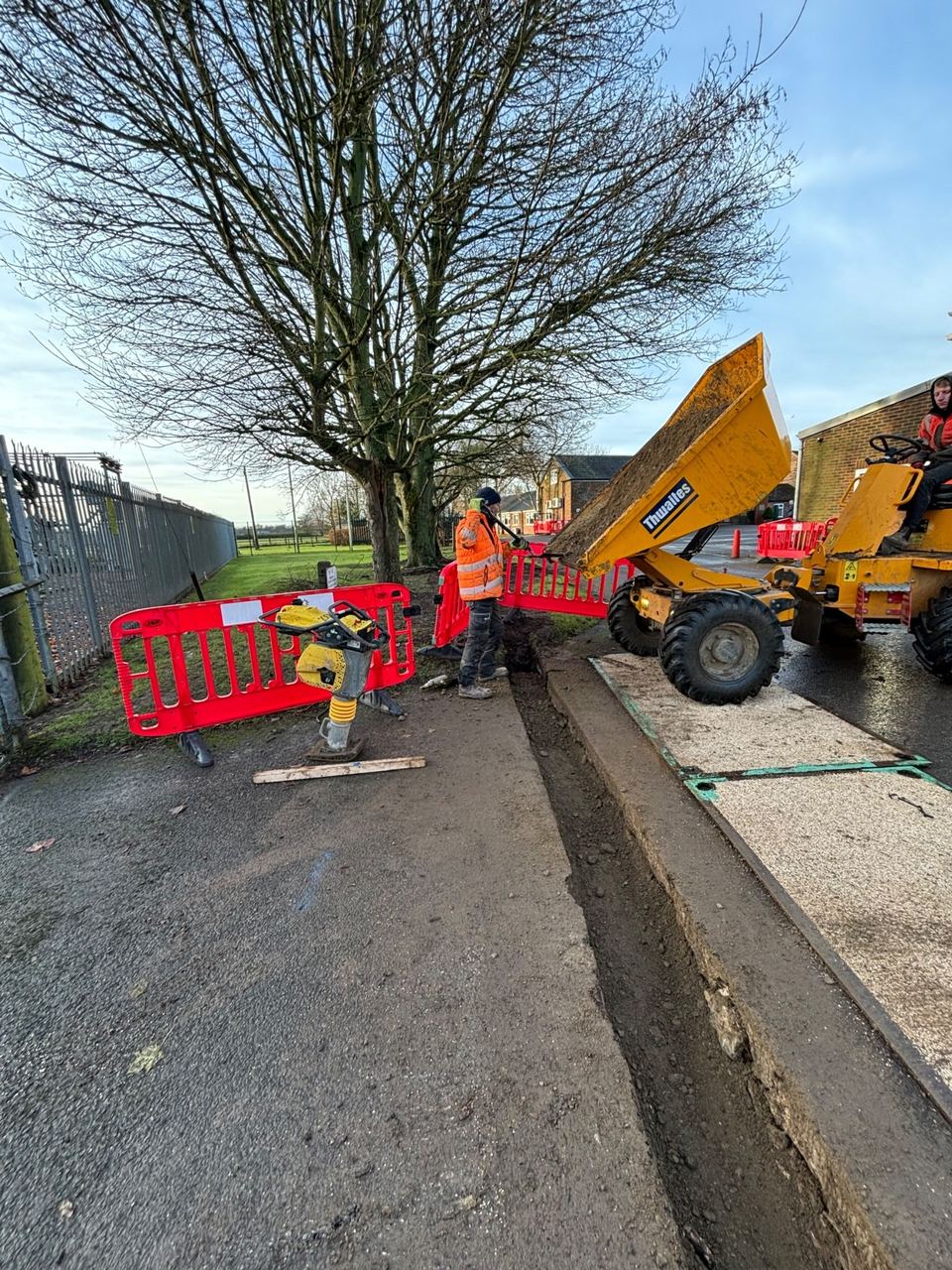
180 m duct run for Taylors Bulbs
180 m of 125 mm electrical duct through a live site, crossing the main entrance with lorries still running.
See the job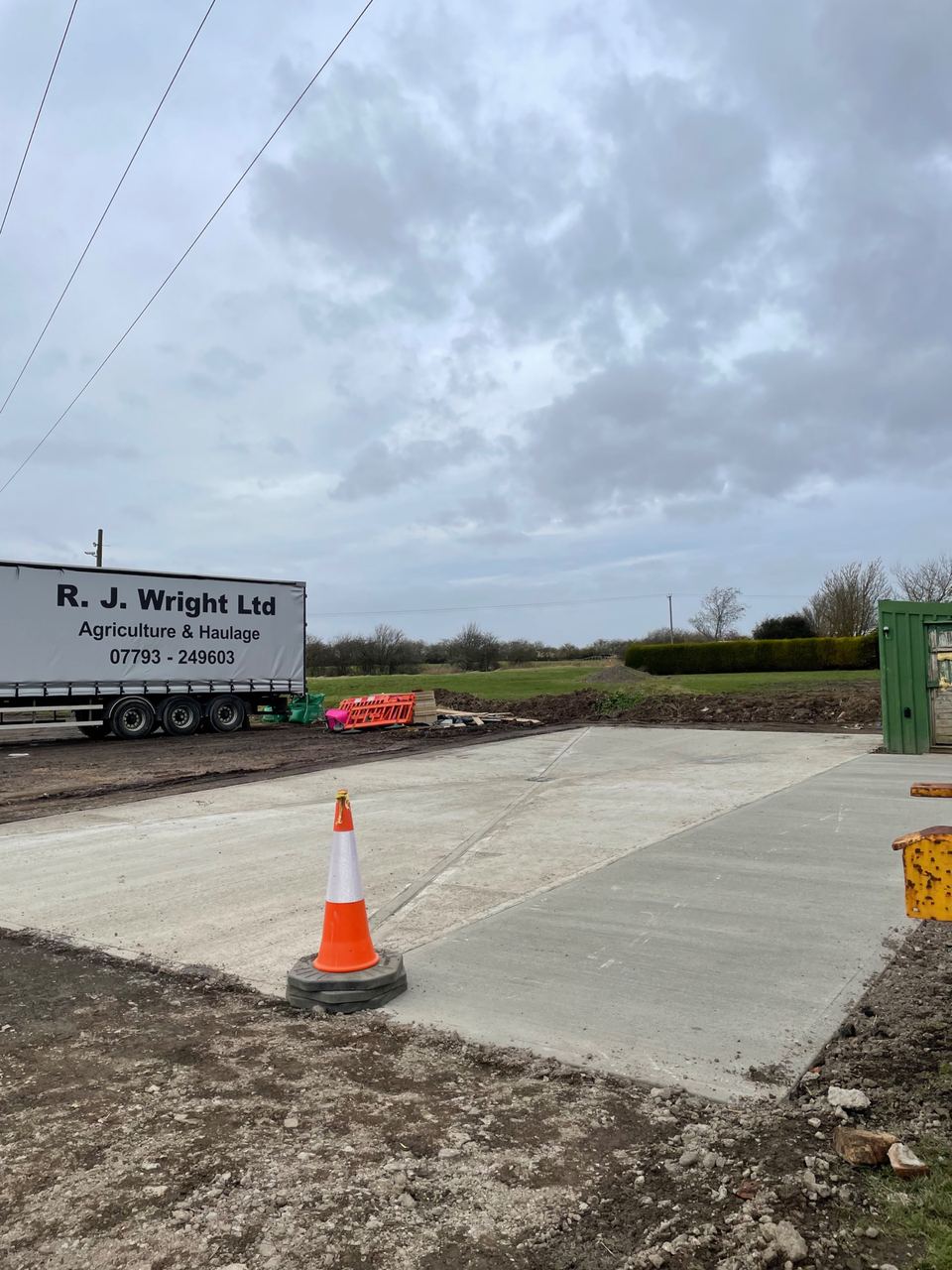
Yard, bays and wash bay
Commercial concrete for RJ Wright Ltd.
See the job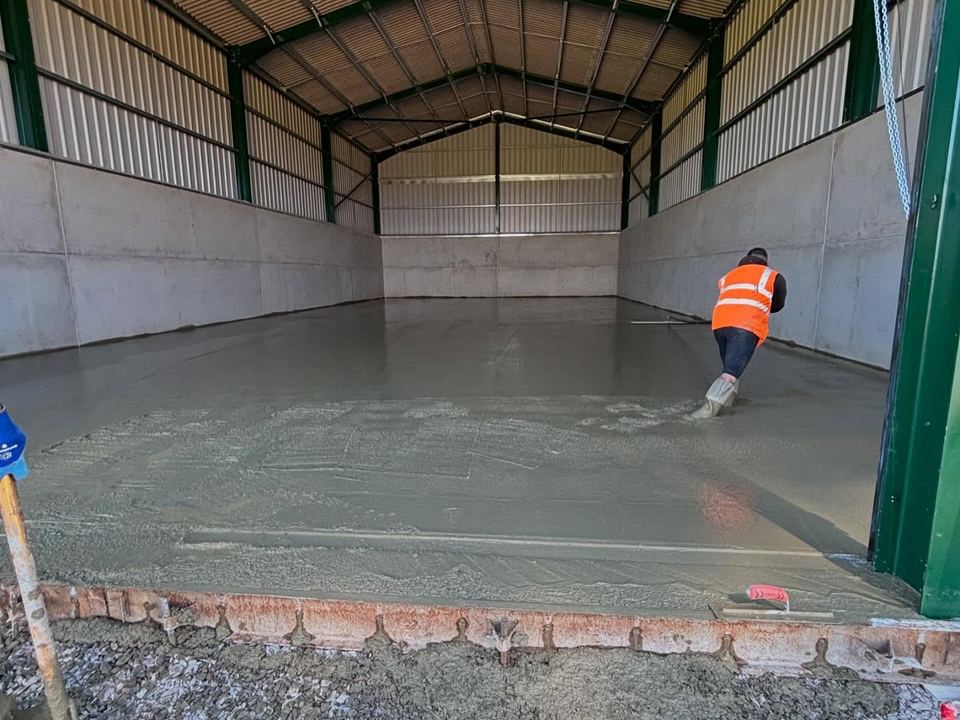
Grain store floors and aprons
Agricultural concrete floors and brush-finish aprons.
See the jobWhat customers say about Haydn and the team
“Just OUTSTANDING from start to finish, nothing was too much trouble and communication was fantastic throughout the process would absolutely recommend him.”
“Competitive rates,would highly recommend. I’ve had many jobs done, all been completed to 100% satisfaction.”
“Excellent service fast and efficient 💪”
Ménage questions, answered
Anything else, ring Haydn on 01945 669203.
Does every ménage need drainage?
Almost every one. Only genuinely free-draining sites get away without, and a test hole on the site visit proves it either way.
How far apart should herringbone drains be?
Spacing follows the soil. Heavy clay needs the laterals closer together than lighter ground. We set it after the site visit.
Can you fix a flooded arena without rebuilding it?
Often, yes. A blocked outfall, silted drains or a dipped base can all be fixed. See arena resurfacing.
Do I need permission to drain into a dyke?
If the dyke is managed by an Internal Drainage Board, yes: the board expects an application before a new outfall goes in. We plan the outfall route with that in mind.
Can drainage be added to an existing arena?
Yes, but the surface and part of the base have to come up first. It is a renovation job: see arena resurfacing.
How long does arena drainage last?
Laid to fall in clean stone, with a membrane keeping fines out and the outfall kept clear, the drainage lasts as long as the arena. Most failures come from a blocked outfall or a missing membrane.
What is the best stone for an arena base?
Clean, angular, washed stone with no fines, laid in rolled layers and blinded with a finer stone on top.
Book a free site visit
Tell us about the job. Haydn comes out, looks at the ground and the access, and gives you a price.